
Benjamin J. Sunter

I turn strategy into a plan every team can run.

Ten years in business operations, four of them in Google's global partnerships org. I get Product, Finance, GTM and Engineering onto the same numbers, then build the planning, reporting and tools that keep them there.

  • $26.5Bmerger integration, 24 workstreams across 16 VPs
  • 7 teamsone planning cycle for a multi-billion-dollar Americas business
  • 256%peak pipeline velocity from a targeting system I built, with 8-figure incremental revenue
  • 27 daysfrom white paper to a live line of business
  1. Accenture2016 – 2021 Built and ran a merger integration PMO.
  2. Google2022 – 2025 Partnerships planning, then selling to publishers.
  3. Included Health2026 Launched a new line of business and ran the cost program behind it.
Benjamin J. Sunter
What I bring

Four things, every time

200+stakeholders, one plan

A plan every team signs up for

I build the plan with the teams instead of handing it to them. At Google that meant annual planning and budget across seven teams; at Included Health, an OKR framework the COO adopted into the next year's plan.

56initiatives in one cadence

Keeping big programs on track

Weekly forums and VP reviews that kept 56 initiatives across four product areas moving. On the merger I ran it for 16 VPs, none of whom reported to me.

11,000+user stories tracked

Reporting people rely on

The SQL and Looker layer that joined pipeline to product adoption at Google, and the Tableau reporting behind 60+ projects on the merger.

5tools built and shipped

Tools, when the right one doesn't exist

If a plan needs a system that isn't there, I build it. Five so far. The two built for planning are written up below.

The same five steps every time: frame the decision and who owns it, model the constraints, diagnose what's holding everything up, intervene where it pays off soonest, and operationalize it with an owner and a number to track. The simulator runs these steps end to end →

01The work

Things I've built

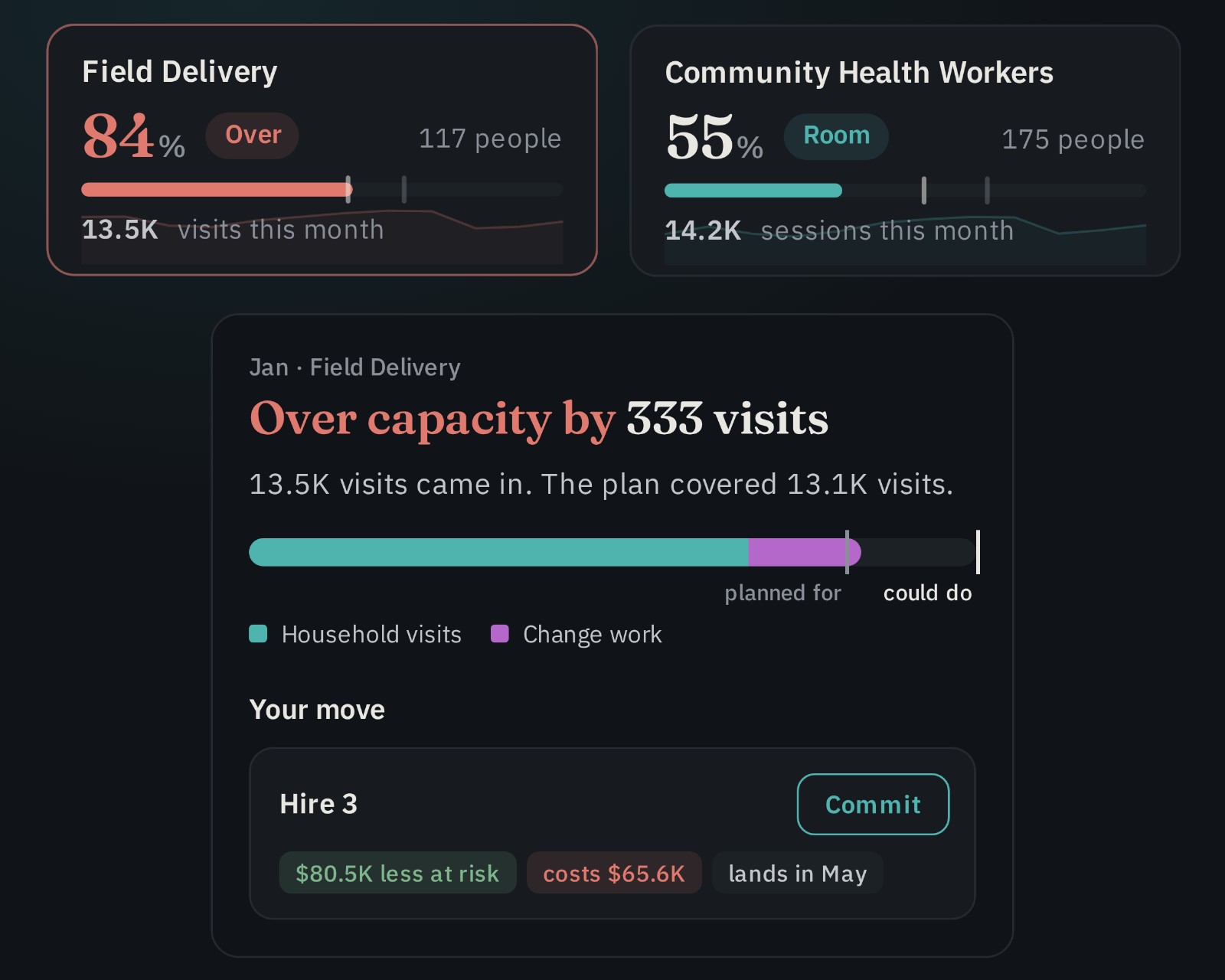
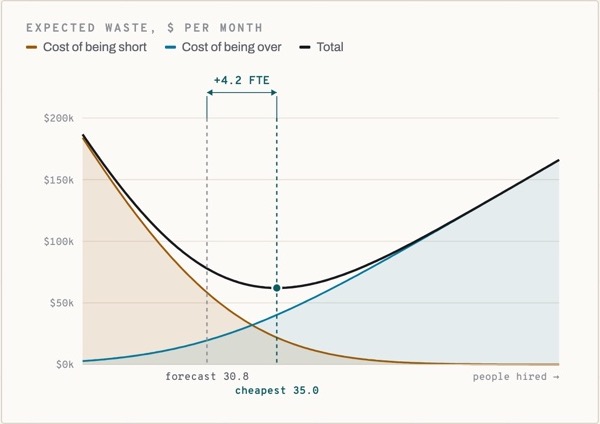
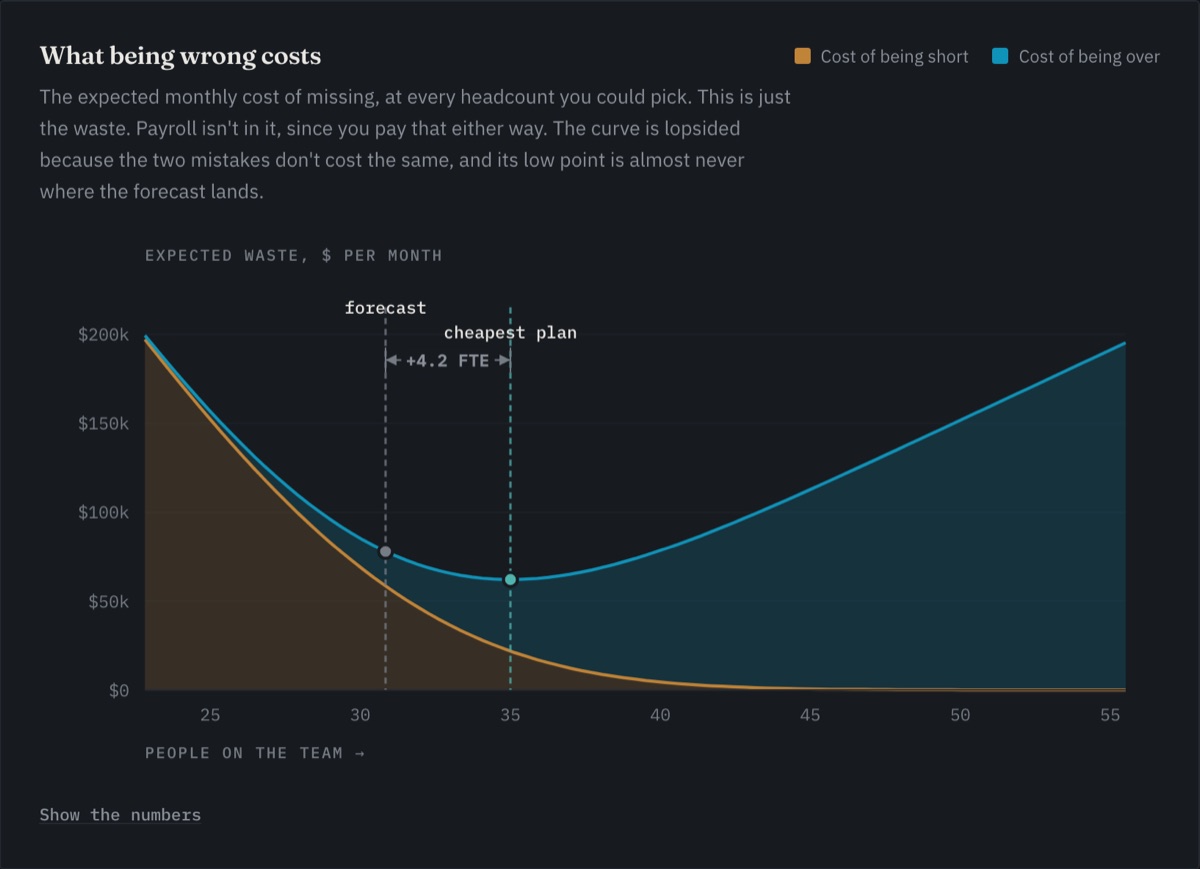
Both tools below are for planning work. One runs a whole year, the other sizes one team. Three more, built for other problems, are under them.

02Experience

Three companies, ten years

Jan 2026 – Sep 2026
Remote

Business Operations Manager

Included Health
27 daysWhite paper to live offering
5 monthsManual operations to digital-first
Two thirdsLabor cut per case on outreach

What I got wrongI built a claims-based signal to speed up client launches. It cut conversions in half, and I shut it down two weeks after shipping it.

What I did here 4 items

The briefLaunch a new line of business, and show the cost of running the work early enough in the year to do something about it.

Scope

  • New line of business
  • Cost-of-revenue portfolio
  • OKR architecture
  • Enterprise book
  • Workforce planning
  • Launching a new offering. Took a new line of business from white paper to live in 27 days, then spent the next five months scaling it across our enterprise book and moving its manual operations to a digital-first model.
  • Cost-of-revenue portfolio. Took over a scattered, multi-million-dollar workstream and had its operating cadence running in seven days. Within two weeks, initiatives with quantified impact went from roughly half to all of them. That gave workforce management what it needed to translate initiatives into FTE impact, and planning cycles closed noticeably faster than the year before.
  • Executive governance. Wrote the OKR and goal-setting framework that went to the COO, moving the company from tracking activity to tracking outcomes. It was adopted into the following year's operating plan.
  • Structural cost takeout. Automated manual outreach into warm inbound routing, cutting labor per case by about two thirds and surfacing several million dollars in uncommitted opportunity.
Jan 2022 – Dec 2025
Mountain View, CA

First Party Data Solutions Consultant

Google Global Partnerships · also Program Manager, Sellside Partnerships
8-figureIncremental revenue from the targeting system
234%Of H1 2025 quota, top regional performer
>20% y/yARR per FTE across the 200-person org, three years
What I did here 7 items

The briefGet a fragmented regional partnerships org planning, selling and reporting as one business.

Scope

  • 7 vertical teams
  • 20+ sub-teams
  • 200+ stakeholders
  • 56 initiatives
  • 30+ Fortune 100 publishers
First Party Data Solutions Consultant · Jul 2024 – Dec 2025
  • Pipeline analytics to revenue. Built the SQL and Looker layer that joined sales pipeline and CRM data with product-adoption data, then designed a Q3 sales competition on top of it. It drove eight-figure incremental revenue against target and a peak of 256% quarter-over-quarter pipeline velocity, and pGTM adopted the approach globally.
  • Product adoption. Helped 30+ Fortune 100 publishers adopt privacy-safe first-party data products across web, app and CTV, generating nine figures in incremental annual revenue.
  • Quota. 234% of my H1 2025 quota with 92% client satisfaction, the top performer in my region.
Program Manager, Sellside Partnerships · Jan 2022 – Jul 2024
  • Business operations. Ran annual planning, budget and execution for the multi-billion-dollar Americas Sellside Partnerships business: 7 vertical teams, 20+ sub-teams and 200+ stakeholders.
  • Execution governance. Kept 56 initiatives across 4 core product areas on track through weekly cross-functional forums and VP QBRs.
  • Speaking. Represented Google as the speaker at a co-branded LiveRamp executive summit in New York, briefing 20+ agency buyers on app addressability and identity.
  • Operational excellence. Led the regional OpEx program, which grew ARR per FTE across the 200-person Americas org by more than 20% a year for three years.
Oct 2016 – Feb 2021
Seattle, WA

Program Manager

Accenture
$26.5BTelecom merger integration
24Workstreams under 16 VPs
190+Applications retired in 12 months
What I did here 3 items

The briefBuild the operating structure a five-year integration would run on, before the deal had even closed.

Scope

  • 16 VPs
  • 60+ projects
  • 150+ delivery teams
  • 11,000+ user stories
  • 4 direct reports
  • Merger integration. Engagement lead on a $26.5B telecom merger, running governance for 24 workstreams under 16 VPs and the integrated plan for 60+ projects from design through testing.
  • Governance and reporting. Designed and ran the architecture compliance review and the Tableau reporting behind it. In five months, 150+ delivery teams working across 190+ applications designed 600+ features through it, with automated tracking of health, progress and risk across 60+ projects and 11,000+ user stories.
  • Team leadership. Ran business operations for the consulting unit with four direct reports, across 24 domain teams and a dozen vendors.
2016
Gainesville, FL

B.S. Industrial & Systems Engineering

University of Florida

Lean Six Sigma Green Belt · Google Project Management Certificate

Case studies and articles

Problems, worked through

Problems from my own work, and operating questions that usually get decided on gut feel.

Cost & forecasting

Getting cost numbers to people in time to act on them

Unit cost used to show up from finance late in the year, when the only lever left was headcount. I turned it into a number three teams agreed on and saw every month.

54% → 100% of initiatives with quantified impact, in two weeks

What I got wrong: I built the complete version first and the one-page version second. It should have been the other way around.

Read the case study →


Program governance

Building a PMO for a deal that hadn't closed yet

Several hundred people kept building through months of regulatory hold, on a deal that might not have made it through review.

74% → 95% on-time deployments, in under three months

What I got wrong: I didn't standardize intake before a dozen vendor teams each built their own tracker.

Read the case study →
Go to market

Giving sellers a number they could pitch

Sellers already had the list. They couldn't tell a publisher what it was worth, so they kept losing to pitches that came with a number.

8 figures of incremental revenue, and a peak of 256% pipeline velocity

What I got wrong: I scoped the queries to my own region, so I couldn't validate the results in the two regions that adopted it.

Read the case study →
Operating model design

Half a Day of Nothing

A support function can stay central or split into dedicated pods. A shared person would have to be 73% slower on every request before pods come out cheaper, which is much further than most people guess. The break-even also shifts with client size.

Read it →
Measurement

Did it work?

Paste the number you watch, click when you changed something, read one sentence. How the tool decides, the false-alarm rate it was held to, twelve pastes shaped like real exports, and the slope fix I tried that made things worse.

Read it →
Operating notes

The smallest ask that works

I designed an intake form around what I needed and didn't think about what anyone would fill in. Then I blamed stakeholders when nobody used it. Forty-two fields, three of them ever read, at a company whose CRM already had most of the answers.

Read it →
05Outside work

A bit about me

Ben Sunter holding a cheerleader overhead on one arm during a game at Ben Hill Griffin Stadium
The Swamp, 2012.
Ben Sunter above the Virgin River valley, Zion National Park
Above the Virgin River valley in Zion.
Contact

Let's talk

If you have a messy cross-functional problem that needs structure, numbers and a way to keep it moving, write to me. Nobody has to own it yet.

Based
Denver, Colorado
Focus
Partnerships & alliances, business operations, strategy & operations, chief of staff, technical program management
Code
github.com/bsunter93