← Benjamin J. Sunter Work
Work

Everything I've built and written

Grouped by the problem each one is for.

Planning tools

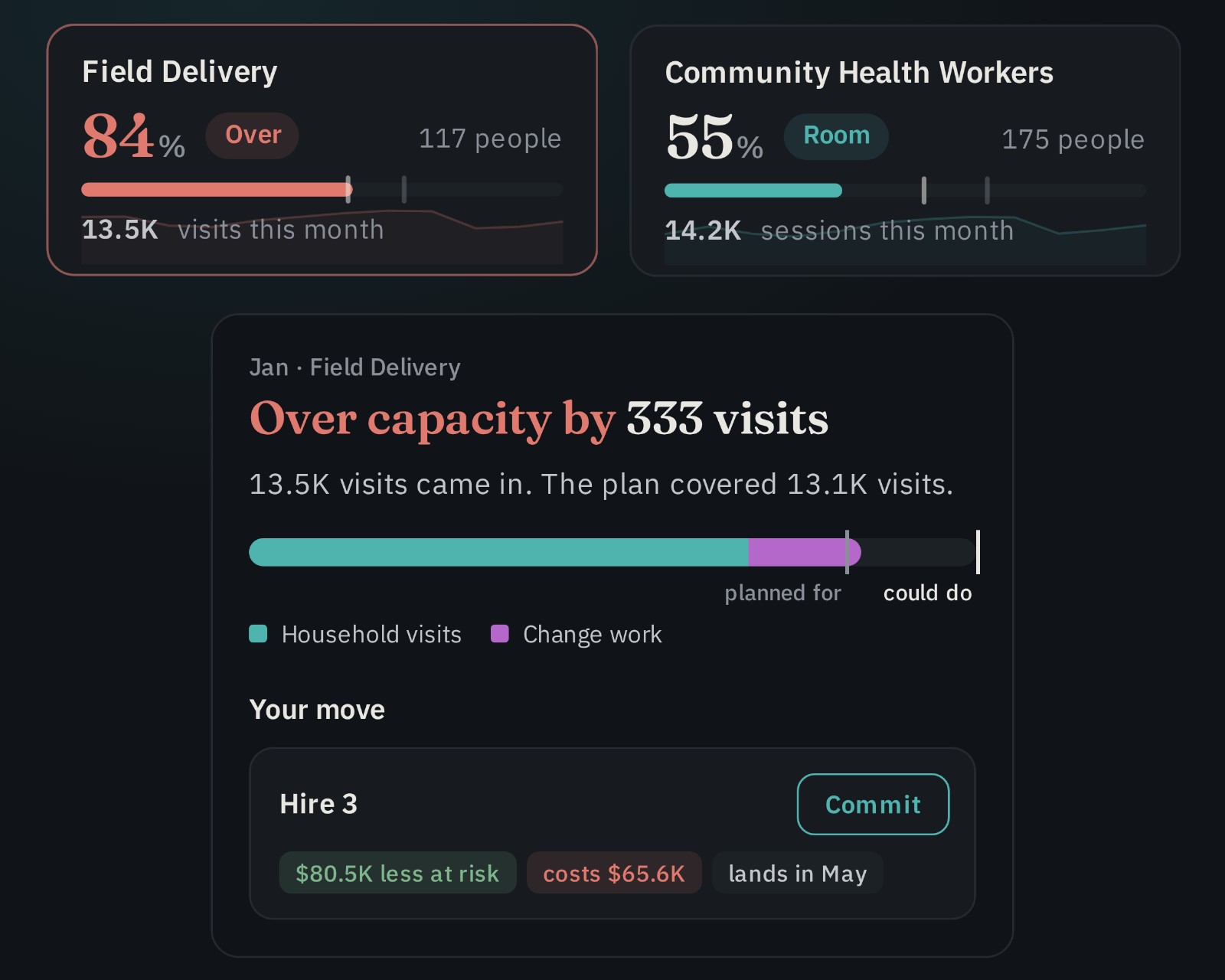
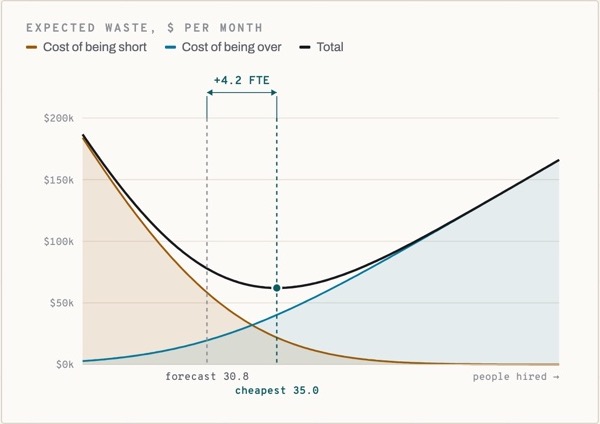
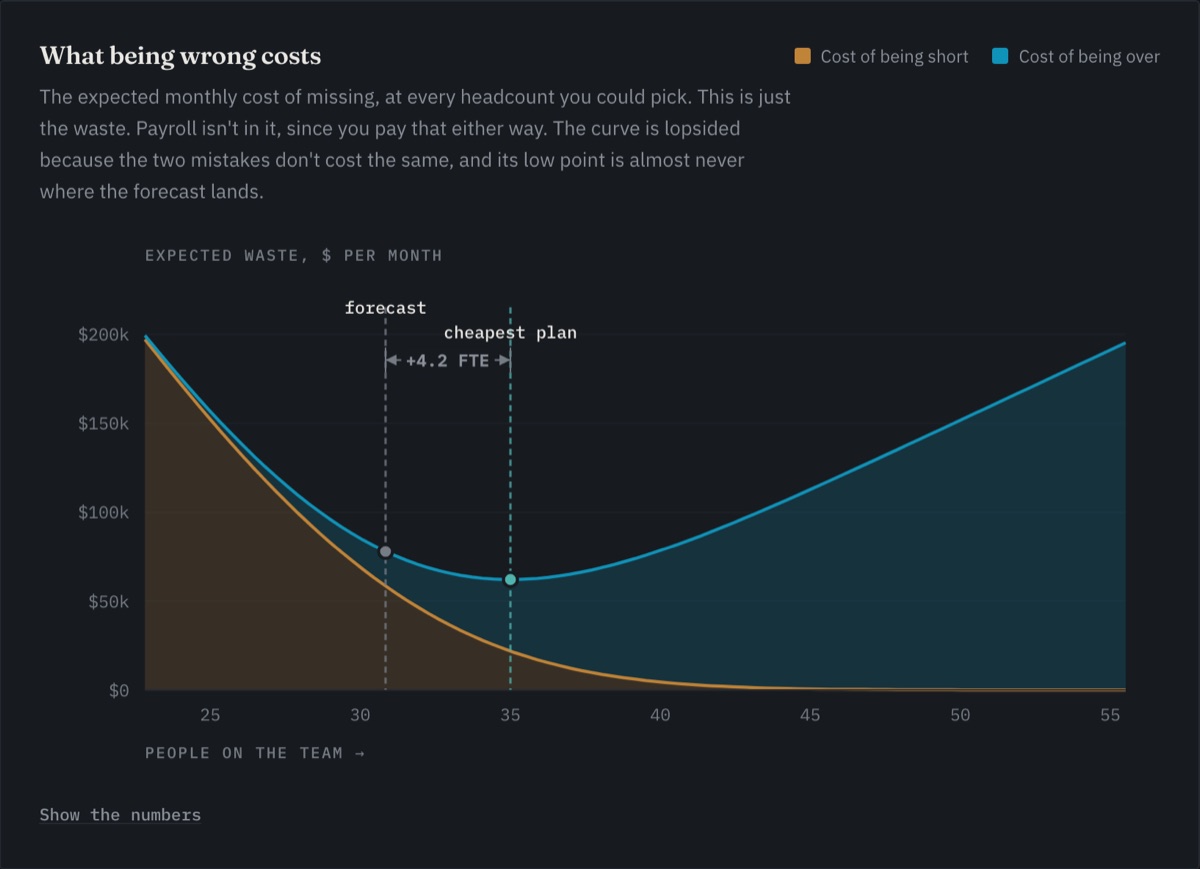
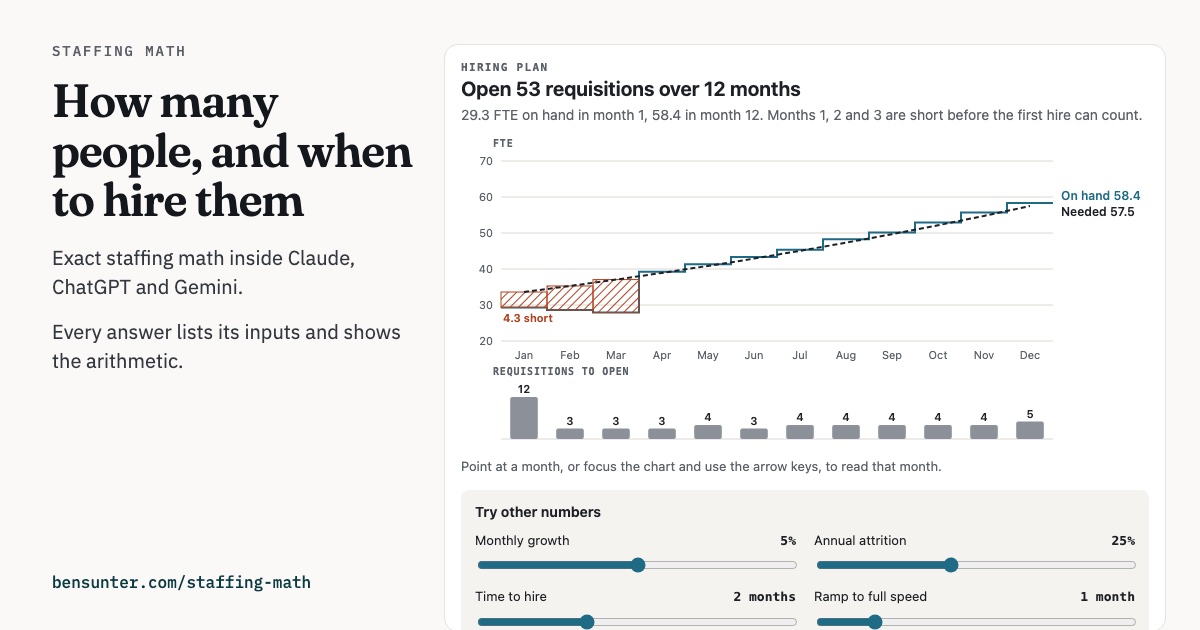
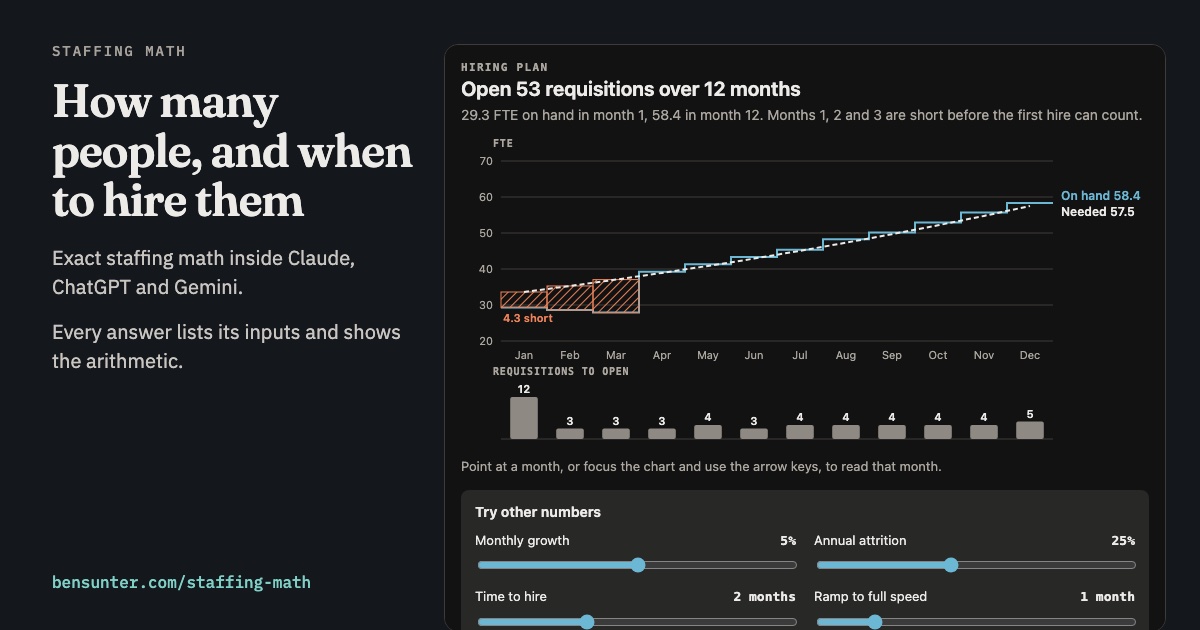
Test whether a plan holds up, size a team when the forecast will be off, get the hiring math inside Claude, ChatGPT or Gemini, and check whether a change moved the number.

Case studies

Planning, revenue, execution and cost, one problem each from my own work.

Planning and resource allocation

Turning a 10% headcount cut into a resource map

Headcount had to fall 10%, about 20 roles, across seven teams. I ran the six-month process that turned that into a budget for each director, then tracked the year against it.

$60M incremental revenue that close-the-gap plans helped generate

Read the case study →
Revenue and commercial execution

Giving sellers a number they could pitch

Sellers already had the Secure Signals list. They couldn't tell a publisher what it was worth, so they kept losing to pitches that came with a number.

$40M incremental revenue against target, and a 256% peak in pipeline movement

What I got wrong: I scoped the queries to my own region, so I couldn't validate the results in the two regions that adopted it.

Read the case study →
Large-scale execution

Building a PMO for a deal that hadn't closed yet

Several hundred people kept building through months of regulatory hold, on a deal that might not have made it through review.

74% → 95% on-time deployments, in under three months

What I got wrong: I didn't standardize intake before a dozen vendor teams each built their own tracker.

Read the case study →
Cost and forecasting

Getting cost numbers to people in time to act on them

Unit cost used to show up from finance late in the year, when the only lever left was headcount. I turned it into a number three teams agreed on and saw every month.

54% → 100% of initiatives with quantified impact, in two weeks

What I got wrong: I built the complete version first and the one-page version second. It should have been the other way around.

Read the case study →

Writing

Operating questions that usually get decided on gut feel.

Operating model design

Half a Day of Nothing

A support function can stay central or split into dedicated pods. A shared person would have to be 73% slower on every request before pods come out cheaper, which is much further than most people guess. The break-even also shifts with client size.

Read it →
Measurement

Did it work?

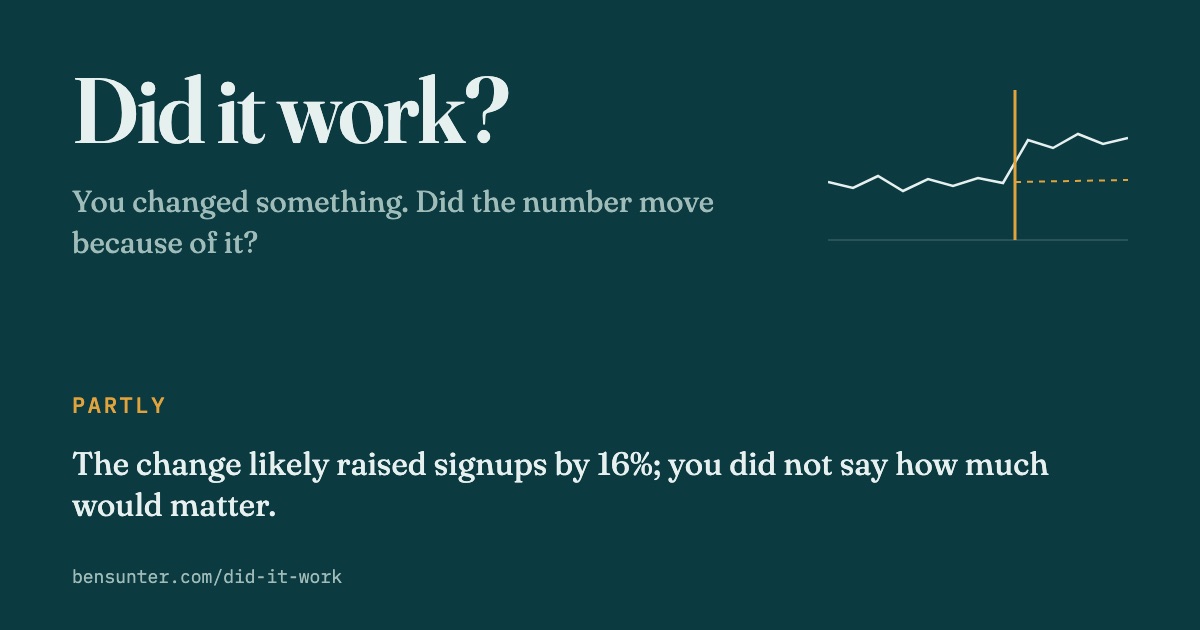
Paste the number you watch, click when you changed something, read one sentence. How the tool decides, the false-alarm rate it was held to, twelve pastes shaped like real exports, and the slope fix I tried that made things worse.

Read it →
Operating notes

The smallest ask that works

I designed an intake form around what I needed and didn't think about what anyone would fill in. Then I blamed stakeholders when nobody used it. Forty-two fields, three of them ever read, at a company whose CRM already had most of the answers.

Read it →

Spreadsheet tools

Free tools for Google Sheets.

Google Sheets

Comment Export

Writes every comment in a spreadsheet to a sortable tab: sheet, cell, author, date, resolved status and replies.

Read about it →
Google Sheets

CommentPulse

Pulls every comment thread out of a Google Sheet, with its tab, its cell and its replies. Runs in your browser. Nothing is uploaded.

Try it →
Google Sheets

Goal Seek: Checked Answers

Finds the value of one input cell that makes a formula reach a target. Before it shows an answer, it recalculates your sheet with that answer in place.

Read about it →

Side projects

An experiment in tracing what an event changed, a journaling app on Google Play, and an Etsy shop of beach prints made from NOAA data.

History

Ripple

Drop in an event everyone remembers and watch what it changed, in the order it happened, with how sure it is of every link.

Try it →
Android

Mirror

A small AI journaling app.

See it on Google Play →
Prints

The Ocean That Day

Tide and ocean-temperature prints for any US beach, made from NOAA data.

See it on Etsy →